

Students today need more than just good grades to be successful in an academic and/or professional environment that is rapidly changing. They need to develop their ability to analyse information, solve problems, think and make logical decision making and to think independently. It’s here that Critical Thinking Skills for Students are very important. Through these skills, learners are able to move beyond being able to just memorize facts and learn to understand, question, evaluate and apply knowledge effectively.
A lot of students who have difficulties in learning at school are not that intelligent in fact but they have weaker learning methods than active learning. Often take information on board without questioning it, don’t delve into it further into solve unfamiliar problems. This can all be transformed by having excellent critical thinking skills.
Whether it is for exams, homework or when a student wants to discuss ideas, or when they have to make a decision about the future, critical thinking allows them to make better decisions and also enhance their learning performance. It also helps to develop confidence, creativity and independence.
Students will have an opportunity to read seven ways that they can be more smart and powerful in their thinking. You will find strategies, practical examples, typical pitfalls and advice from experts as well as ways to fortify your mind to promote lifelong learning and success.
Table of Contents
ToggleWhat are Students’ Critical Thinking Skills?
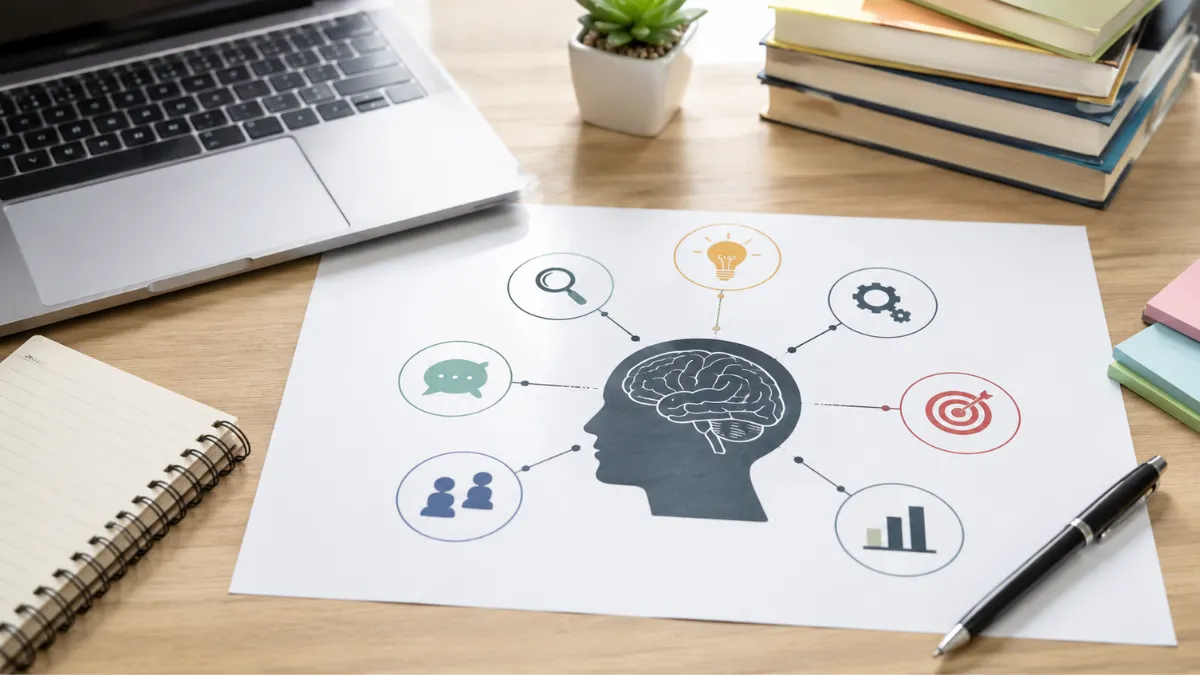
Critical thinking is the ability to think clearly, logically and independently in making decisions and accepting information as true. Involves examining facts, evaluating ideas, problem solving and finding effective solutions.
Students’ critical thinking is the ability to:
- Asking meaningful questions
- Understanding different viewpoints
- Solving problems logically
- Avoiding assumptions
- Making informed decisions
- Evaluating information carefully
Students, who have good critical thinking skills, don’t just learn to repeat the answers they found in the book, but they learn the concept well and apply it in life.
Why Critical Thinking Skills for Students Matters in Student Life
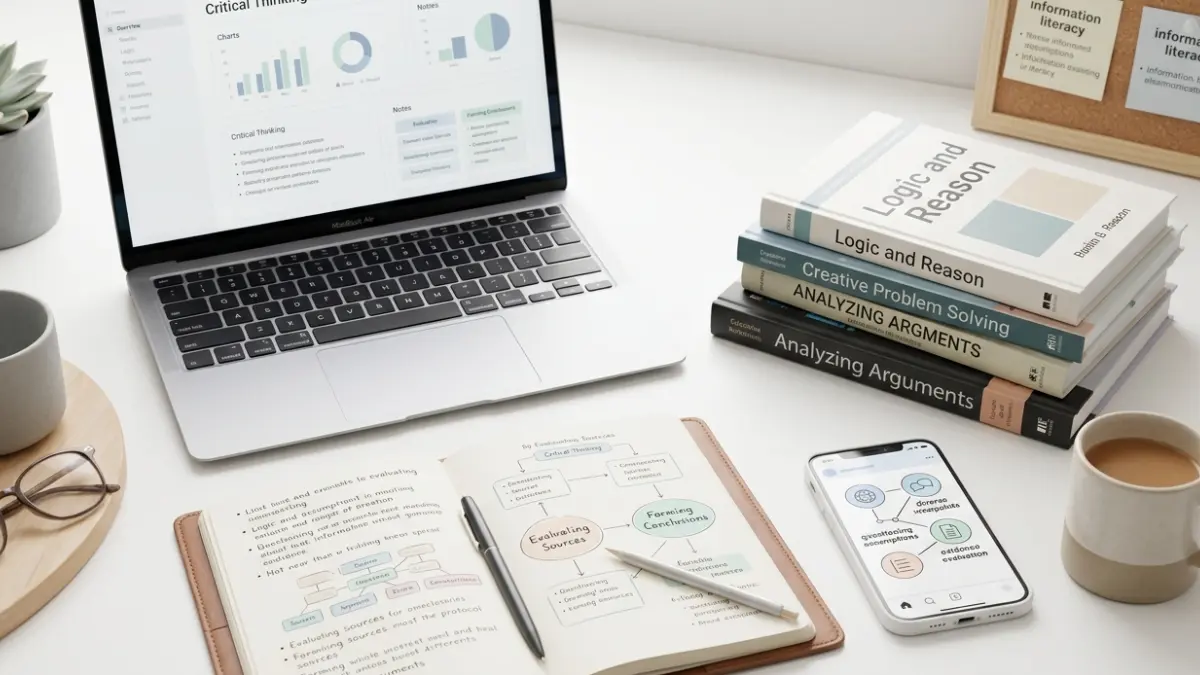
They can’t do without critical thinking skills since the students get confronted with complex information daily. They are inundated with opinion, facts and arguments in class discussions, on social media and more. If you don’t have critical thinking, it’s easy to take information in one ear and out the other or make a bad choice.
The critical thinking skills are crucial for students because of the following benefits:
- Improves academic performance
- Strengthens problem-solving abilities
- Supports students in their decision making process
- Puts forward innovative thoughts and ideas
- Gives confidence in speaking
- Establishes confidence in ability to communicate
- Supports independent learning
- Helps students to prepare for further career opportunities
Students who are able to think independently and solve problems well are highly sought-after by the employers and universities.
1. Spend Some Time Each Day Asking Questions
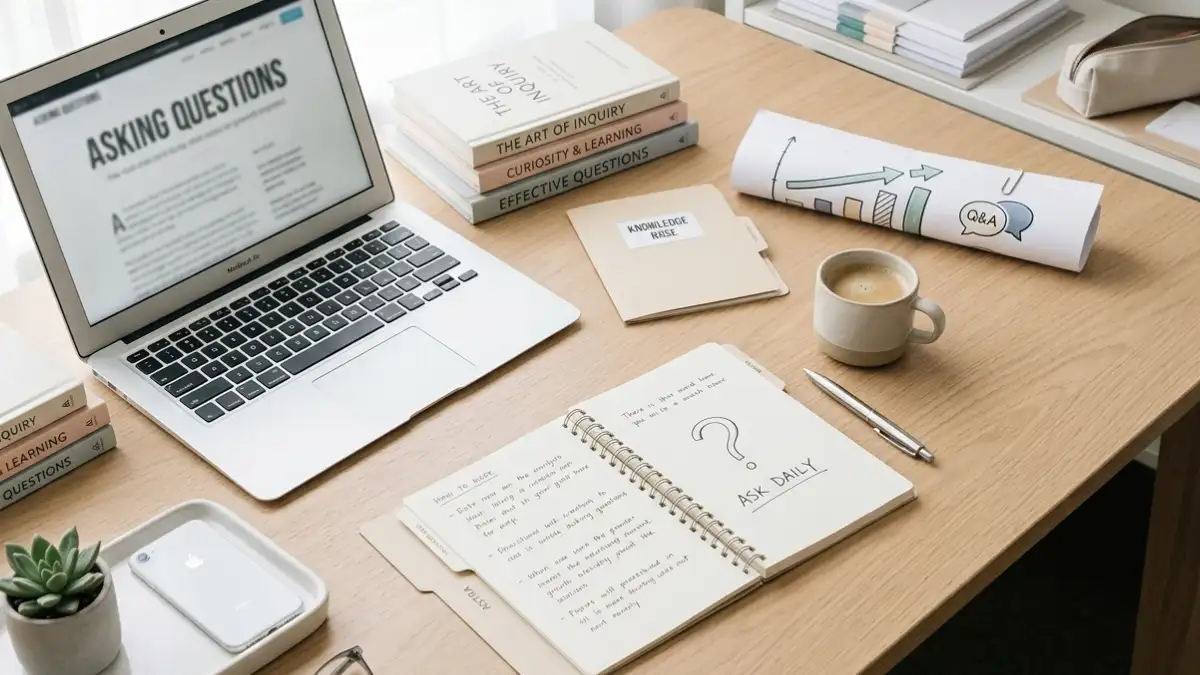
It is the easiest way to develop student’s critical thinking skills to learn how to ask better questions.
For many students, the emphasis they place is just getting answers. But, with intelligence questioning, there is the development of depth of understanding.
Some Examples of Powerful Questions
Instead of asking:
“What do you think is the answer?”
Ask:
- Why do you think this is the answer?
- What information from the text do you have to back up this point?
- Can you think of another way that this could happen?
- What would be the consequences of this being a mistaken idea?
The questions are designed to promote thinking, not just memorizing, by students.
Real-Life Example
Suppose that a student reads a chapter of a history book that is discussing a war. Passive Learner: Learner who recites dates and events. A critical thinker’s questions are:
- What was the reason for the conflict?
- Was there any way to prevent the War?
- What was the impact of this upon normal people?
- Was it logical to make such choices?
This more in-depth analysis clarifies and enhances understanding and retention.
Practicing Daily – Exercises To Do
- During study sessions have at least three “why” questions
- Question information respectfully
- Critically evaluate pros and cons of an argument
- Make a list of interesting questions to learn more about them
With time questioning becomes a second nature to them, increasing their thinking skills.
2. Solve Real Situations to Improve Problem Solving Skills
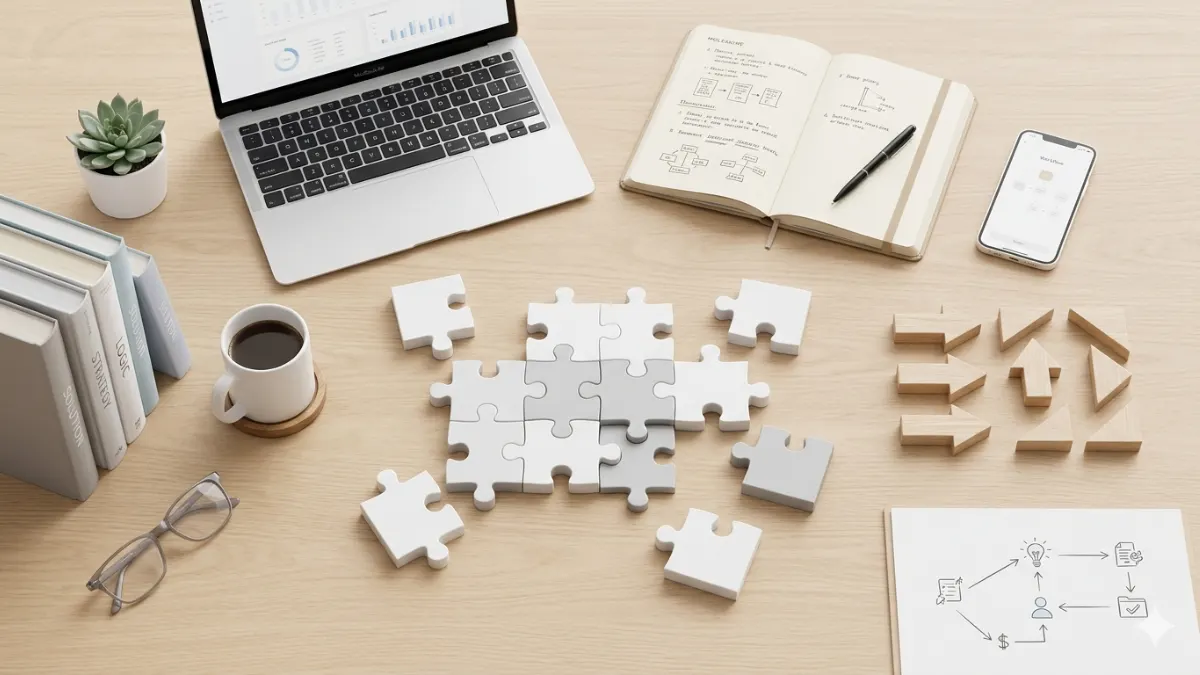
In the students’ learning, one of the most important critical thinking skills is problem solving skills. When students take part in the process of solving the challenges, they are able to enhance their thinking skills.
Why Problem-Solving Matters
The real world doesn’t provide easy-to-answer answers like those found in textbooks. Students will be provided with guidance to learn how to:
- Identify problems clearly
- Analyze causes
- Compare solutions
- Predict outcomes
- Make logical decisions
Strategies for Improving Problem-Solving Skills in a Practical Way
Divide Large Problems Into Smaller Problems
Rather large tasks or challenging topics may seem daunting. Instead of panicking:
- Break up work into smaller chunks
- Develop skills to work with just one issue at time
- Create realistic deadlines
Continue Using “Cause and Effect” Method
If you have a problem, then you should ask:
- What caused this?
- What could happen if we don’t take action?
- What might happen if we don’t do something?
- Which of the solutions will give the best results?
Practice Brainstorming
List several solutions before deciding on a solution. This helps to cultivate flexibility of thinking.
Student Example
One of the reasons why a student may be facing low grades in his exams may be thinking:
“I don’t do very well when it comes to studying.”
A critical thinker would analyse:
- Do I have the proper balance of time management?
- Is the revision process aiding me to be an effective writer?
- Am I able to grasp the concepts thoroughly?
- When I am studying am I distracted?
Logical analysis leads to practical improvement.
3. Study the Bible to Know God’s Word, Not to Read It
Not reading books is not a sure way to make a person less intelligent. Students’ critical thinking skills development is one of the most effective by active reading.
Passive reading is a type of reading that does not involve any intensive reading. In active reading, there is a need for analysis, reflection and evaluation.
An Active Reading Method for Learning from Texts
Highlight Important Ideas
Mark:
- Key arguments
- Evidence
- Important facts
- Unclear sections
Be Able to Paraphrase Information
Once you have read a section describe it in simple terms, without referring to the text. This enhances, improves understanding and clear thinking.
Compare Different Perspectives
Read texts from various sources on a subject. This will prevent students from having one sided thinking.
Example
The rules of thumb for using social media:
- The subject can be discussed with regards to benefits in one of the sources
- Yet another may provide data on risk
- Another may give information on risk
Critical thinkers make comparisons of both points of view before they decide on opinions.
The Best Reading Materials to Develop Thinking Skills
- Educational articles
- Biographies
- Science content
- History books
- Problem-solving case studies
- Opinion editorials
Quality reading has an impact on expanding knowledge and developing reasoning skills.
Recommended Educational Resources
4. Develop Independent Thinking Habits
Critical thinking involves independent thinking and it is an important part of students’ critical thinking skill. It is to make up opinions that are based on logic and evidence, and not blindly following others.
The Reasons Behind Why Students Are Not Able to Think for Themselves
Many students:
- Fear making mistakes
- Overrely on fellow students or teacher(s)
- Take information for granted and without analysing it
- Adhere to trends, without questioning them
It restricts a person’s mental development.
There Are a Number of Ways in Which Students Can Develop Independent Thinking
Avoid Blind Agreement
When taking in ideas ask:
- Does this seem logical to you?
- What are some of the reasons for it?
- Do there seem to be other points of view?
Take Small Decisions Yourself
Develop independence in making decisions in the following areas:
- Study methods
- Time management
- Goal setting
- Project planning
Consider Your Own Opinions
Ask yourself:
- What makes you think that?
- Was I thorough in thinking through the facts?
Real-Life Example
While listening to other students in the class say:
“Math is impossible.”
A person with a critical mind investigates it, rather than accepting it, instead:
- The issue is that of poor teaching?
- Do additional practice activities need to be added?
- Are there alternative ways of learning that will be helpful?
This attitude engenders confidence and resilience.
5. Exercise Logical Analysis and Decision Making Skills
Logical thinking assists students to think rationally and calmly in the situations. Improved logical analysis, academic performance and daily decisions.
Logical Analysis: What is It?
Logical analysis means:
- Examining facts carefully
- Identifying patterns
- Avoiding emotional reactions
- Coming to conclusions on the basis of evidence
Simple Exercises to Enhance Logic
Analyze Online Content and News
Ask:
- Does this information seem to be accurate?
- Is there evidence?
- Do you recognize the newspaper and/or the author?
- Is the information one-sided (biased)?
Solve Logic Puzzles
Activities like:
- Sudoku
- Chess
- Brain teasers
- Strategy games
can enhance analysis thinking skills.
Predict Outcomes
When thinking, first think:
- What are some of the outcomes that could result?
- Which of the following is the most feasible?
Example
Consideration factors for a student’s choice of studying late at night could include:
- Will I not be able to concentrate tomorrow because of not getting enough sleep?
- What about studying as compared to being up early?
Logical analysis enhances the quality of decision making.
6. Enhance Communication and Discussion Skills
Students’ critical thinking is developed at a high level through good communication. Considered discussions stimulate students to different thoughts and enhance students’ reasoning skills.
Why Discussions Matter
Explain ideas: when students explain ideas:
- They are able to think clearly
- Identify weak arguments
- Learn new perspectives
- Improve confidence
The goal of this class is to teach students how to develop and conduct a meaningful discussion.
Listen Carefully
Critical thinking is a two-way street – listening as well as speaking.
Give Reasons for Opinions With Evidence
Instead of saying:
“It’s possible that this is the case.”
Say:
“Research/experience shows that—this is my belief.”
Respect Different Opinions
Healthy discussions can lead students to deeply consider issues in an objective manner.
Group Study Advantage
Group discussions can be effective by:
- Clarify confusing concepts
- Introduce alternative solutions
- Improve teamwork skills
But, it should be a discussion and not a debate.
7. Learn to Reflect on Mistakes and Learn From Them
Students’ critical thinking skills can be enhanced through reflection, one of the most potent means.
Mistakes provide students an opportunity to learn and improve their judgment and problem-solving skills.
Why Reflection Matters
If a student does not reflect, he/she will repeat the same mistakes. Reflection helps identify:
- What worked
- What failed
- Why mistakes happened
- What did you do well and what is there to improve upon for next time?
Students will use the Reflection Questions to help document the process of their observations.
Following Exams/Assignments Ask
- What were the strategies that were successful?
- What are the things that I have done wrong?
- Have I done a good job of preparation?
- What do I need to work on for the next time I do it?
Practical Reflection Habit
Review each week – 10 minutes:
- Study habits
- Productivity
- Decision-making
- Challenges faced
This results in continual enhancements.
Real-Life Example
When a student is not successful in his/her presentation, he/she might say:
- Was preparation incomplete?
- Were there any indications that nervousness had an impact on speaking?
- Did the subject area/areas need to be explored in depth?
Reflection helps to transform failure into a learning experience.
Common Mistakes That Hurt Critical Thinking Skills
Since critical thinking skills are essential for success in the classroom, and in life, it is important to avoid the following errors in thinking.
Pupils’ thinking power can be undermined by poor habits even by hard working students.
Common Pitfalls to Avoid
1. Memorizing Without Understanding
Rote learning is not conducive to in-depth analysis.
2. Avoiding Questions
The reluctance of the student to ask question is retarding intellectual development.
3. Believing Everything Online
There is only not every piece of information on the internet that is accurate.
4. Ignoring Different Perspectives
Quality of reasoning – one sided thinking.
5. Only Opinions Are Taken Into Account
For a strong conclusion, evidence and logic is required.
6. Worry About Getting Things Wrong
Errors are a component of learning and enhancements.
These habits can make students dumber instead of smarter; and more self-confident thinkers.
Recommended Learning Resource
There Are Ways That Teachers and Parents Can Help Foster Critical Thinking
There are ways that a teacher and parent can help encourage critical thinking.
Parental and teacher support for thoughtful learning lead to accelerated student learning.
Helpful Support Strategies
Encourage Curiosity
Provide ample opportunity for students to ask questions.
Focus on Understanding
Focus on a deep learning as opposed to grades.
Discuss Real-Life Problems
Discussions about situations in the day help to develop reasoning.
Promote Independent Learning
Provide opportunities for pupils to find out and reason things out themselves.
Encouragement: Effort and Analysis
Value reasoning skills, rather than right answers.
Enabling contexts build up confidence in learning.
Long-Term Benefits of Fostering Students’ Critical Thinking Skills
The skills of critical thinking are not only beneficial in school but will carry over throughout life.
Academic Benefits
- The students’ understanding of subjects is improved
- Enhanced writing and analysis skills
- Higher exam performance
- Stronger research abilities
Career Benefits
People who can:
- Solve problems
- Analyze information
- Make smart decisions
- Communicate clearly
Personal Benefits
They also develop their critical thinking skills:
- Confidence
- Emotional control
- Financial decisions
- Daily problem-solving
Students develop these skills that will help them to be successful in all parts of their life.
Everyday Habits That Will Improve Thinking Skills
Little and little makes a big difference.
Effective Daily Habits
- Consume 20 minutes of learning material every day
- Each day try to solve a difficult problem
- Participate in class with questions and comments
- Complete brief reflections in a journal
- Concentrate when studying
- Discuss with knowledgeable persons
- Solve problems in a logical manner in the real world
It’s consistency that is more important than perfection.
Frequently Asked Questions
1. What Are Critical Thinking Skills in Relation to Students?
The critical thinking skills enable students to evaluate and learn the information, to solve the problems, to evaluate logic and to make decisions by themselves.
2. Why Is It Important for Students to Have Critical Thinking Skills in Education?
They enhance understanding, school performance, problem solving and decision making skills, in both school and real life.
3. Is It Possible to Enhance Critical Thinking Skills?
Yes. Students have opportunities to enhance their learning by questioning, active reading, problem-solving, talking and reflecting.
4. How Long Does It Take to Develop Critical Thinking Skills?
Just as with any skill, critical thinking improves over time, as you practice and learn to adopt better practices.
5. What Activities Help Develop Critical Thinking?
Debates, puzzles, active reading, doing research projects, journaling and logical analysis exercises are very effective activities.
Conclusion
Students’ critical thinking is one of the best investments in academic and personal development. They will be able to analyse information with care to solve problems with confidence, to communicate effectively and to make better choices in everyday situations as a result of these skills.
The good news is, that it’s not just for the few. It can be developed through practice, questioning, thinking and practical experiences. Through the effective questioning, logical problem solving, active reading and learning from mistakes, students can practice and train their mind to think better and independently.
The information age is a time of increased importance of good thinking skills. Students who acquire these skills now will be better equipped for life, work and learning in the future.