

In the modern academic world which moves at a very high tempo, reading and memorizing textbooks or notes is no longer sufficient. The only students that really perform are the ones that take an active part in what they are learning. Active Learning Techniques for Students are needed here. Active learning is an active process that makes the study time dynamic, engaging to the brain and enhances interpretation, memorizing and practicing what is learned.
A great number of students do not succeed due to their lack of intelligence but because they use old-fashioned study habits. Reading with no interaction may often result in lack of retention and frustration especially when the hours spent are many. Active learning transforms this by engaging the mind, asking questions, making discussions and putting knowledge into practical applications.
This paper discusses 6 effective and intelligent active learning strategies that can be used by students that have been supported by the educational psychology and experience. These techniques will make you learn more quickly and efficiently whether you are about to have exams, or you are trying to improve your grades or gaining long term knowledge.
What Constitute Active Learning Techniques for Students
Active learning techniques are the methods of study, which involve students actively engaging in the learning process. You do not passively read or listen but rather you involve your brain by:
- Thinking critically
- Solving problems
- Explaining concepts
- Practicing real-world application
The Reasons Why Active Learning Is Effective
When we engage the human brain, it is able to retain information better. Research indicates that students recollect:
- 10% of what they read
- 20% of what they hear
- At least 80% of their active activity
Active learning reinforces neural links, so that the information is more easily recalled when exams are taken or in real life scenarios.
1. Active Recall: The Most Effective Active Learning Method of Students

One of the best techniques of active learning to students is active recall. It is the ability to retrieve the information in the memory without referring to your notes.
Active Recall: How to Practice
- Finish your book after reading a subject
- List all the things that you can remember
- Respond to questions without having to look at the answers
- Self-test using flashcards
Real-Life Example
A student who has revised biology exams reads a chapter, and then closes the book and writes down some of the major concepts such as the process of photosynthesis. This makes the brain to remember things and reinforce the memory.
Why It Works
Active recall enhances better memory retention and weak areas are identified in a very brief time. It will condition your brain to remember what it needs to, when there is pressure, as in exams.
2. Spaced Repetition: Intelligent Temporal Memory
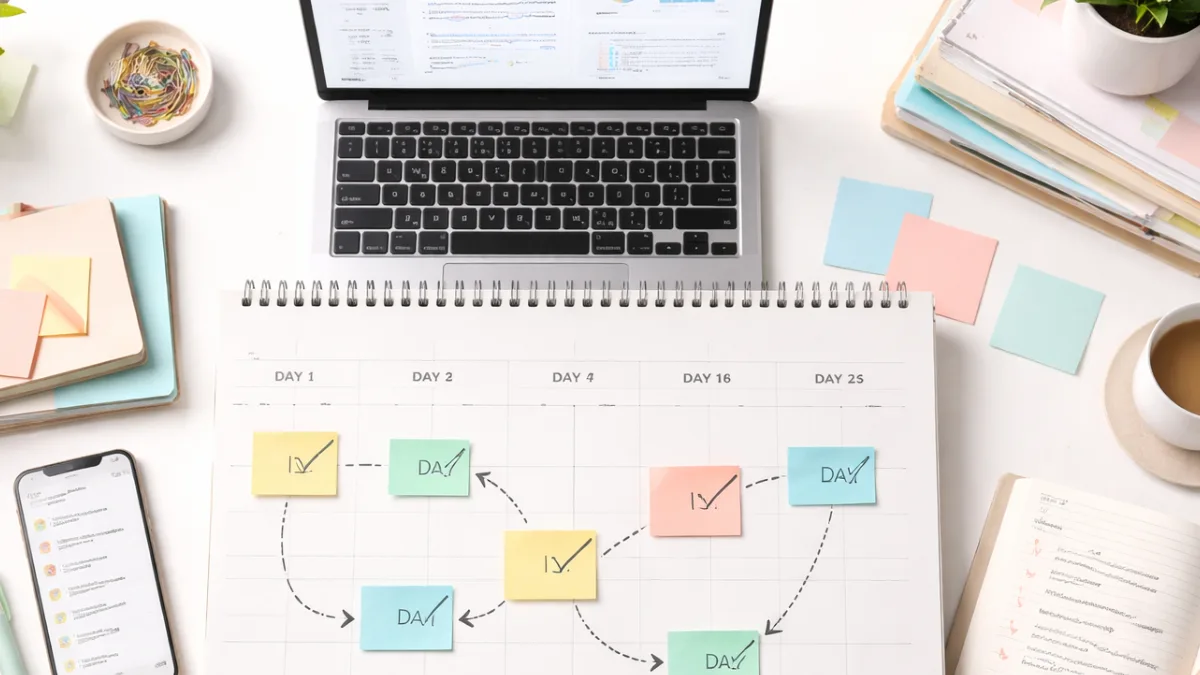
Spaced repetition is an active learning method by students, which is based on repetition of information at a certain time interval.
How It Works
Instead of cramming:
- Study today
- Review after 1 day
- Re-review in 3 days
- Then after a week
Step-by-Step Strategy
- Learn a topic
- Check it the following day
- Increase intervals gradually
- Focus more on weak areas
Practical Insight
Students who revise regularly with time do well as compared to those who study all at once. Spaced repetition aids in moving knowledge to long-term memory.
3. Feynman Technique: Learn by Teaching
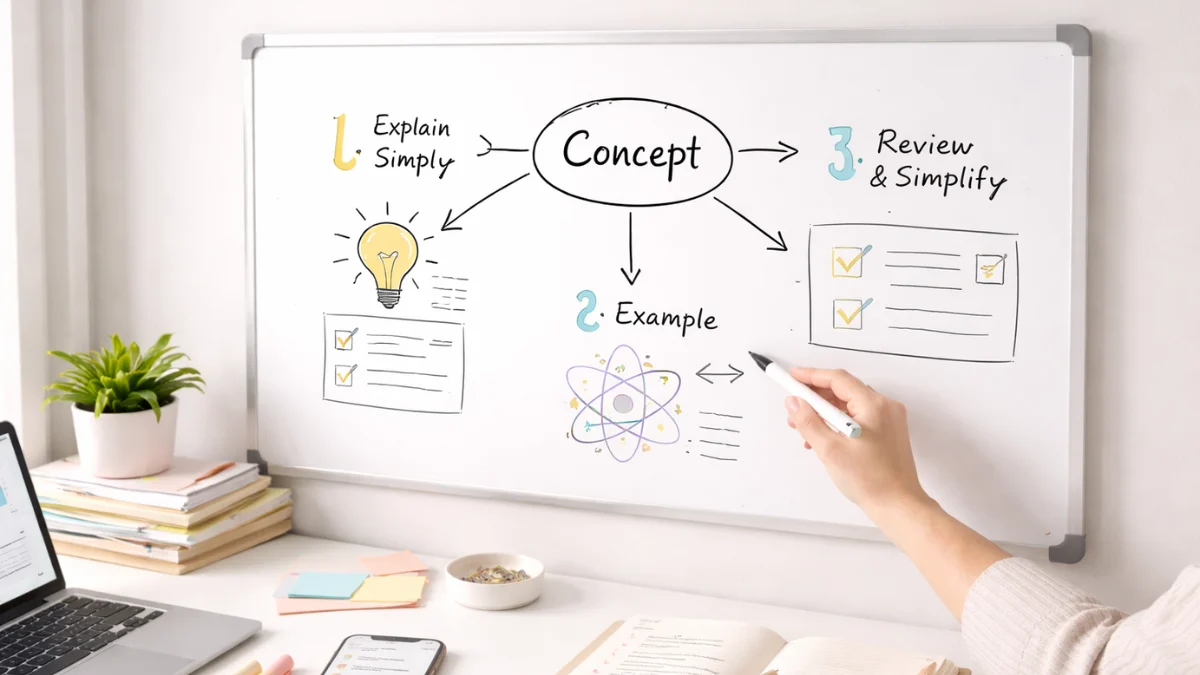
The Feynman Technique is an excellent active learning method among students wherein you learn by giving explanations in simple terms.
How to Apply It
- Choose a topic
- describe it in the simplest way possible
- Determine areas of weaknesses in your knowledge
- Make your explanation as simple and clear as possible
Example
Suppose you are learning physics, define gravity in a way that you can tell a child. When you find it hard, then you do not properly grasp it.
Benefits
- Deepens understanding
- Improves clarity
- Highlights weak areas
- Builds confidence
4. Practice Testing: Simulate Exam Conditions
One of the most feasible active ways of learning among the students is practice testing.
How to Do It
- Do mock examinations
- Solve past papers
- Set a timer
- Do not consult notes when taking the test
Real-Life Scenario
A student who is taking exams practices on past question papers on a weekly basis. They will learn the patterns of questions and they become faster.
Why It’s Effective
- Reduces exam anxiety
- Improves time management
- Strengthens recall ability
- Builds exam confidence
5. Interleaved Practice: Learn Subject Better by Mixing
Interleaving is whereby various subjects or topics are mixed up in the process of study.
Example
Rather than studying math 2 hours at once:
- Study algebra 30 minutes
- Switch to geometry
- Then to statistics go
Why It Works
The brain becomes trained to make the distinction between concepts and use the appropriate approach. It is an excellent active learning strategy among students in such subjects as math and science.
Practical Tip
- Avoid studying one topic for too long
- Switch out the topics to make your brain work
6. Team Study and Discussion: Study Interactively
One of the least recognized active learning strategies by students is learning with others.
The How-to Guide on Its Use
- Join a study group
- Discuss difficult topics
- Questions: Ask and answer
- Teach each other
Real-Life Example
Students studying to do exams make up a small group where they quiz one another per week. This enhances the comprehension and unveils new insights.
Benefits
- Encourages critical thinking
- Improves communication skills
- Increases retention by discussion
Active Learning Techniques Are Beneficial to Students
Active learning techniques have a number of benefits:
- Better memory retention
- Improved understanding of concepts
- Higher exam performance
- Greater attention and concentration
- Stronger problem-solving skills
Active learning strategies tend to reduce the amount of time that students take in studying yet the results are better.
Mistakes to Be Removed by Students
Mistakes may decrease the effectiveness of even the best active learning methods of working with students.
1. Passive Reading
Interaction with the text results in low retention.
2. Cramming Before Exams
Rushing last-minute studying gets the brain overworked and diminishes comprehension.
3. Ignoring Weak Areas
Only easy topics will be limiting improvement.
4. Multitasking While Studying
Using social media during studies decreases concentration.
5. Lack of Consistency
Active learning is not a matter of occasional effort, and needs practice.
How to Create a Routine of Active Learning
Designing a systematic schedule can be used to optimize the use of active learning methods to students.
Sample of a Daily Study Plan
- 30 min: Study new subject
- 20 minutes: Active recall
- 15 minutes: Practice questions
- 10 minutes: Recap on past topics
Weekly Strategy
- do at least one mock test
- Review difficult topics
- Discuss with peers
Consistency is the key to success.
Expert Opinions: Why Active Learning Is Better Than the Traditional One
Based on real world experience and research studies in education, active learning will always lead to better outcomes since it:
- Forces the brain to work harder
- Builds deeper understanding
- Promotes the use of knowledge
- Improves long-term retention
The students who change their passive to active learning style are usually seen to improve after a couple of weeks.
Frequently Asked Questions (FAQs)
1. What are the most effective active learning strategies to use with students
The most effective methods are active recall, spaced repetition, testing in practice, The Feynman Technique, interleaving, and group discussions.
2. What duration must be active learning per day
Even 1-2 hours of active learning, with the focus, is productive as compared to 4-5 hours of passive learning.
3. Does active learning enhance exam performance
Yes, it enhances memory, comprehension and confidence, which results to improved exam scores.
4. Can all subjects be taught through active learning
Yes, it is applicable in all subjects, such as math, science, languages and theory based subjects.
5. What is the rate of my results
Within 2-3 weeks of practice, most students observe that the comprehension and retention have improved.
Conclusion
Learning how to teach students to be active learners can totally change the manner in which you learn. You do not need to waste time doing nothing much but you can get more results in less time when you are able to utilize your brain.
Such techniques as active recall, spaced repetition, practice testing are not only theoretical but also proven methods of successful students all over the world. Consistency and deliberate action are the key.
To become a better student by remembering more, learning at a faster pace, and making better grades on your exams, begin implementing these active learning techniques. Even the slightest modification in your studying routines could make a tremendous difference in your achievements at school.