

Effective exam preparation isn’t about how long you study, but how wisely you use your time. Most students take hours to go through textbooks but they are not able to realize the outcomes they are seeking. The actual distinction is in the utilization of the appropriate strategies, the learning mechanisms and implementation of the techniques that enhance the performance and memorization.
It does not matter whether you have school exams, competitive tests, or professional exams because the appropriate approach can make you feel a lot more confident and score higher. Failure to plan well, lack of concentration, and inefficient methods usually result in stress and poor performance even with bright students.
This guide shares 8 simple and effective strategies for exam preparation that are easy to follow and based on proven methods. You will also get to know the most common mistakes to be avoided, the advantages of proper preparation and frequently asked questions. At the bottom of this paper, you will have a definite, practical roadmap to enhance your studying process and perform better.
Why It Is Important to Study Smart
It makes sense to discuss the reasons why a clear and organized approach to the study is important before getting into the strategies:
- Improves memory retention
- Reduces last-minute stress
- Builds confidence
- Improves time management ability.
- Results into stable academic performance.
Strategic preparation does not make students smarter, they just are better organized and focused.
Make a Practical and Achievable Study Plan for Exam Preparation
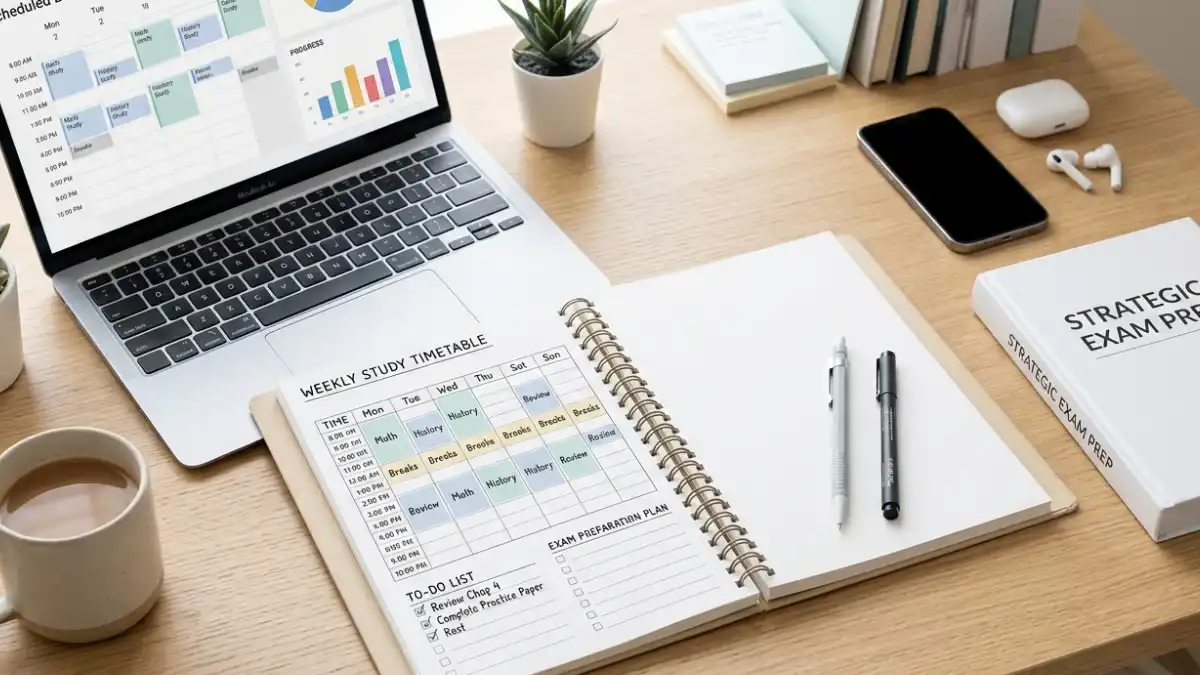
A properly organized study plan is the key to successful exam preparation.
The Question is How to make up an Effective Plan
- Divide your syllabus into few parts.
- Daily assignments of particular topics.
- Establish achievable study time (do not work too much)
- Insert short pauses so as to stay focused.
- Allow time to revise and rehearse.
Real-Life Example
A student who has final examinations sets a weekly goal after which he or she covers a subject as opposed to attempting to cover all subjects simultaneously. This alleviates the stress and makes the progress constant.
Pro Tip
Never work more than you are energetic. Learn hard topics when you are in a fresh mind.
Learn Ideas, not By Heart
One of the most common mistakes in exam preparation is depending only on rote memorization.
The relevance of Conceptual Learning
- Assistance in the response of application based questions.
- Enhances retention in the long-term.
- Removes the confusions during examinations.
How to Apply This Strategy
- Inquire about the why and how during learning.
- Resort to examples, diagrams and real-life associations.
- Educate another person in the idea.
Expert Insight
When individuals have the real concept they will not have to memorize it and it will be easier to remember by default.
Make Use of Active Learning Techniques
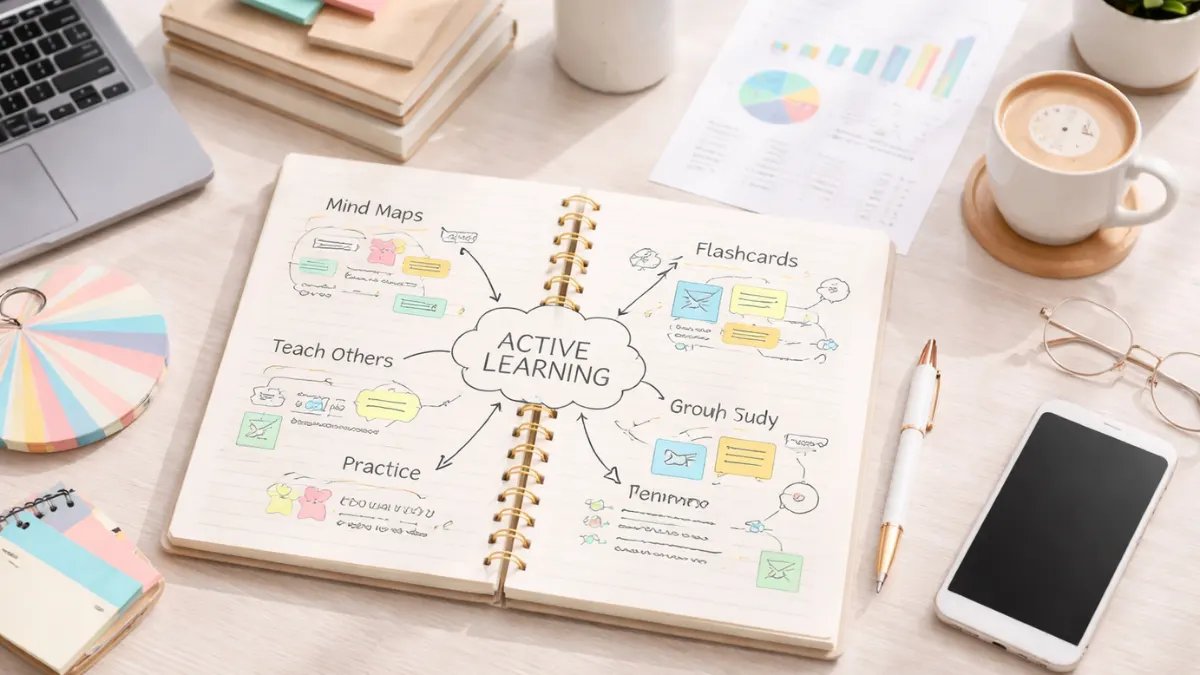
It is not sufficient to be a passive reader. Active learning makes your exam preparation more effective.
Energetic Active Learning Processes
- Drill testing: Answer previous papers and quizzes.
- Flashcards: Excellent when defining and making points.
- Summarizing: Make brief notes by yourself.
- Mind mapping: Visual relationship.
Practical Scenario
A student does not have to go through a chapter three times to learn it but to test and practice questions by her or himself. This enhances recollection and shows areas of weakness.
Improve Your Time Management Skills During Exam Preparation
Time is very important not only during the examinations, but also during preparation.
Time Management Building Better Time Management
- Pre-establish time boundaries in regard to topic.
- Apply timers ( Pomodoro Technique: 25min study and 5min break)
- Distractions (mobile, social media) should be avoided.
- Give priority to significant subjects.
Common Mistake
Wasting time in irrelevant areas when there are hard issues to tackle.
Smart Tip
Exercising of the questions in time limits to imitate the conditions of exams.
Check Periodically to have Good Retention
Revision is the core of effective exam preparation.
Why Revision is Important
- Reinforces memory
- Identifies weak areas
- Improves confidence
Best Revision Techniques
- Weekly revision sessions
- One to use short notes and summaries.
- Solutions to past examinations.
- Reviewing (enhances memory) before bedtime.
Real-Life Example
A learner studies every week, rather than learning at the last minute, and thus he or she understands better and is not stressed.
Exercise a Healthy Routine of Studying

The performance in exams directly influences your physical and mental well-being.
Important Habits for Better Exam Preparation
- Get 6-8 hours of sleep
- Eat balanced meals
- Stay hydrated
- Use brief intervals in studying.
Why This Matters
Sleep deprivation and ill health diminish concentration, memory and productivity.
Expert Insight
It is your brain that works better when your body is rested and has greater energy.
Finding Past Paper and Practice Test
Practicing previous exam papers is one of the most effective exam preparation techniques.
Benefits of Mock Tests
- Introduces you to the patterns of examinations.
- Improves speed and accuracy
- Reduces exam anxiety
- Highlights weak areas
How to Use This Strategy
- Solve exam papers with time limitations.
- Review mistakes carefully
- Concentrate on areas with weaknesses.
Practical Tip
Conducted mock tests should be treated like actual exams to instill confidence and discipline.
Positive Thinking on Exam Stress
Mental ability is a big factor towards exams.
How to Stay Motivated
- Set small, achievable goals
- Do not compare others with yourself.
- Have breaks to rejuvenate your mind.
- Deep breathing or relaxation.
Common Challenge
The fear of failure has some negative impacts on performance.
Solution
Be result-oriented, not result-achieving. Constant effort is a sure thing.
Common Mistakes You Should Avoid During Exam Preparation
To the best of your results, these are the errors that you should avoid:
- Studying without a plan
- Memorizing on the one hand.
- Ignoring revision
- Long and continuous study without breaks.
- Avoiding difficult topics
- Last-minute cramming
- Not practicing past papers
Advantages of Effective Exam Preparation
The advantages are obvious in case you adhere to the right strategies:
- Increased academic performance.
- Reduced stress and anxiety
- Gained concentration and discipline.
- Better knowledge of topics.
- Increased self-confidence when taking exams.
The most frequently asked questions (FAQs)
How many hours should I study daily for exam preparation?
It is dependent on your level and the type of exam, but it normally works at 3-6 concentrated hours, with breaks in between.
What is the best time to study?
Most students prefer to enjoy the morning time, but find a time that you are most alert and attentive.
I need to know how to be more focused when I study
- Remove distractions
- Use short study sessions
- Take regular breaks
- Stay physically active
Is group study effective for exam preparation?
Yes, but then only when it is focused. It aids in the discussion of the concepts and the elimination of doubts.
How am I to remember what I am studying?
Apply active learning strategies such as revision, practice test and teaching others.
Conclusion
Successful exam preparation is not about working harder it’s about working smarter. You can improve your performance greatly by developing a systematic program, mastering of the concepts, exercising on a regular basis, and having a healthy routine.
The tips contained in this guide are realistic, testable and simple to implement. To begin with them gradually, and you will realize a definite difference in your confidence, productivity and outcomes.
Always keep in mind, it is all about consistency. Small things that are done day by day can generate big success in the future. Keep your eyes on the prize, remain disciplined and have confidence in your preparation.