
Education is hardly an effort that succeeds. Those students who have steady academic development are often guided by well-organized systems that would allow them to manage time and organize study materials, as well as stay focused on what they want to accomplish because of the long-term perspective. This is where educational planning strategies become extremely valuable.
Educational planning is not merely in creating a mere timetable. It entails having achievable objectives, priorities of learning, time management, and habits of studying that facilitate the long-term academic development. A well-planned learning plan can help greatly in enhancing productivity and knowledge whether one is doing school exams, university studies or whether he or she is a professional in development.
Most students do not find it difficult because most of them are not dumb, but simply fail to get organized in their studies. In case of the lack of planning, one can find it easy to procrastinate, miss out on deadlines or feel overwhelmed by academic work.
By applying effective educational planning strategies, students can turn complex study goals into manageable steps. This paper describes seven intelligent and pragmatic tips that can assist students achieve robust study habits, enhance concentration and enhance the learning performance in an organized and sustainable manner.
Why Educational Planning Strategies Are Important for Students
It is necessary to find out the reasons education planning is such an important issue in academic achievement before discussing the particular methods.
Well-structured educational planning strategies help students:
Planning their priorities in learning.
Use time more efficiently
Reduce academic stress
Track progress toward goals
Enhance concentration and incentive.
Develop regular studying mechanisms.
Learning to plan education helps students to acquire skills that are not only useful at school but also in the workplace.
Set Clear Academic Goals
One of the most effective educational planning strategies is defining clear academic goals. Students can also study without direction and purpose without specific goals.
Why Goal Setting Matters
Specific objectives offer inspiration and concentration. They assist students in knowing what they would like to attain and make a direction towards the attainment of the same.
Types of Academic Goals
Goals can be divided by students into three major categories:
Short-Term Goals
Writing weekly assignments.
It is planning on how to handle future quizzes.
Finishing reading chapters
Medium-Term Goals
Raising the school performance in a given subject.
Doing a project in a semester.
Getting a better mark on examinations.
Long-Term Goals
Leaving academic school with good performance.
Getting ready to university admission.
Developing professional competencies.
Practical Example
Instead of saying:
“I want to study more.”
A better goal would be:
I will go through mathematics an hour a day in the evening and do five practice questions.
This is clear enough to make learning an attainable and easy feat.
Design an Organization Study Plan
Another key element of effective educational planning strategies is building a structured study schedule.
Most of the students are overwhelmed since they attempt to learn all at the same time. A proper plan will break down the work into smaller and manageable study bursts.
Steps to Create a Study Plan
Write down all the subjects and assignments.
Determine the next deadlines.
Spread out a number of study hours.
Give priority to challenging matters.
Revise the schedule on a regular basis.
Example Study Plan
A simple weekly plan may include:
| Day | Study Focus |
|---|---|
| Monday | Mathematics practice |
| Tuesday | Science concepts |
| Wednesday | English reading |
| Thursday | Review and revision |
| Friday | Homework completion |
This structure helps students remain consistent and avoid last-minute pressure.
📚 External Educational Resource
Students can also learn structured productivity strategies from platforms like
Harvard Business Review which regularly publishes research-based insights on time management and focus in learning environments.
Give Priority to Tasks with Importance Method
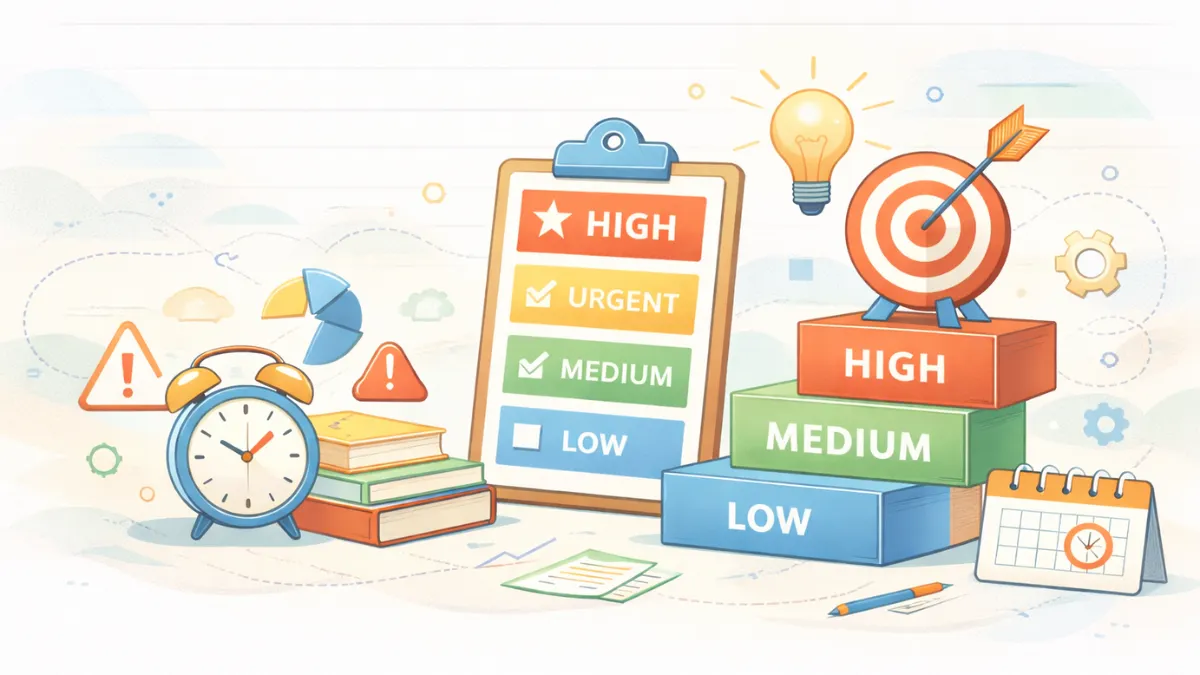 Some tasks in a study are not equally important. Certain tasks must be handled instantly whereas some may be deferred to a later date.
Prioritization is one of the most practical educational planning strategies because it helps students focus on high-impact tasks.
Simple Priority System
The students can subdivide the tasks into three categories:
High Priority
Upcoming exams
Project deadlines
Difficult subjects
Medium Priority
Homework assignments
Practice exercises
Weekly revision
Low Priority
Optional reading
Extra learning materials
Task Prioritization Merits
Reduces confusion
Improves productivity
Prevents procrastination
Helps cope with workload effectively.
Students with their priorities first will have a better control of academic tasks.
Divide Large Goals of the Study into Little Tasks
Big academic objectives are usually daunting. Students can procrastinate because they tend to find the task too large to study.
Breaking tasks into smaller steps is one of the most powerful educational planning strategies for improving study consistency.
Example
Instead of:
Study the whole chapter in history.
Break it into smaller tasks:
Read section one
Write summary notes
Review key dates
Practice questions
Every minor task will be simplified and will lead to less mental stress.
Why This Strategy Works
Increases motivation
Creates visible progress
Makes learning manageable
Reduces study anxiety
Those students who turn to this approach have a better chance of engaging in a long-term study.
Apply Techniques of Active Learning
It is important to plan the study sessions, but the way of studying is also significant.
Effective educational planning strategies include active learning techniques that improve understanding and memory.
Examples of Active Learning
Self Testing
Students evaluate themselves once they have studied a subject.
Teaching Others
It is better to explain concepts to classmates, in order to learn.
Practice Exercises
Problem solving enhances knowledge.
Concept Mapping
It is possible to create visual diagrams to organize information.
Practical Example
Having learned a science subject, a student can:
Write a summary
Create flashcards
Practice questions should be used to test them.
Active learning makes the students remember what they have learned better than passive reading.
Set Periodic Review Meetings
Most of the students read and think that they will be able to recall everything. Studies however indicate that long-term memory is enhanced by regular revision.
Scheduling revision is a crucial part of successful educational planning strategies.
Effective Revision Pattern
A simple cycle of revision that can be followed by students is the following:
Go through assigned material in 24 hours.
Revise again after one week
There are further reviews to conduct before exams.
Advantages of Periodic Review
Enhances the memory retention.
Identifies weak areas
Builds exam confidence
Lessens the mad-minute study.
Students are in a better position to remember things when revision is included in the study plan.
📘 External Educational Resource
Research on learning science and effective revision techniques can also be explored through
Edutopia which publishes educational research and practical learning strategies for students and educators.
Monitor Progress and Change Study Plans
Any plan of study cannot be left. Students are required to measure the progress and implement required changes in strategies.
Tracking progress is one of the most practical educational planning strategies because it allows continuous improvement.
Ways to Track Progress
Students are able to track their learning by:
Weekly study journals
Completed task checklists
Practice test scores
Personal reflections
Example
In the situation when a student realizes that he/she has some problems with mathematics even after frequent studies, a student can:
Increase practice sessions
Seek additional resources
Seek clarification of teachers.
This is an adaptive method that enables students to conquer the difficulties and enhance performance.
Benefits of Using Educational Planning Strategies
Students who apply structured educational planning strategies often experience several academic advantages.
Better Time Management
Students get to know how to study and also be able to balance study with other commitments.
Reduced Academic Stress
Planning eliminates pressure before exams.
Better Learning Effectiveness
Planned lessons enable the students to learn subjects more effectively.
Higher Academic Confidence
It is confidence in exams through constant practice.
Stronger Study Discipline
Learning is a life long process that students engage in long term habit.
Professional Advice on how to succeed in education planning
Educational professionals usually stress that it is not how many hours one is studying but how he/she studies smarter.
There are certain useful tips and suggestions of the experts such as:
Study at the most favorable time.
Avoid distractions of all kinds on the computer when studying.
Also have a regular daily routine.
Take breaks because of mental exhaustion.
Pay attention to the learning of concepts and not memorization.
Students who combine these practices with strong educational planning strategies often achieve more consistent academic progress.
Typical Errors that learners commit when planning their education
The absence of planning mistakes in students is not universal even among motivated students as sometimes they make mistakes in planning that diminish the effectiveness of studying.
Excessive Workload of Study Schedule
Attempting to learn a lot of topics in a single day becomes a burnout.
Ignoring Breaks
When students are studying continuously, they lack concentration.
Unrealistic Expectations
Goals should not be set in a way that is not achievable.
Lack of Flexibility
Inflexible plans can be unsuccessful in case some unforeseen tasks emerge.
Skipping Revision
In the absence of revision, the students lose the important information.
These errors should be avoided so that the students can have a sustainable and balanced study schedule.
Frequently Asked Questions
What are educational planning strategies?
Educational planning strategies are structured methods that help students organize their learning goals, study schedules, and academic priorities to improve study results.
What is the purpose of educational planning to the students?
Educational planning enables the students to organize time efficiently, minimize stress, and study routines which are constant leading to improved academic achievements.
What do students need to do to make an excellent study plan?
Setting of clear goals, Organization of subjects, scheduling of study sessions, prioritization of activities and periodic review constitute the way through which students can develop a study plan.
What is the frequency of revision of study material by students?
The student is ideally supposed to revise within 24 hours after learning, after one week, and before examinations so as to reinforce the retention of the material.
Does educational planning enhance performance in exams?
Yes. Effective educational planning strategies help students prepare systematically, which improves understanding, reduces stress, and enhances exam performance.
Conclusion
Preparation and organization are closely related to academic success. When students study thoughtfully and systematically, they also have the chances of gaining a stable progress and improved results.
Effective educational planning strategies help students transform complex academic goals into manageable steps. Having clear goals, formulated Learning plans, prioritizing, active learning strategies and frequent review of progress can help students achieve a lot in increasing the efficiency of their studying.
It is not the planning of education that involves studying more, but smarter. Individual students will gain important skills like time management, self-discipline, and critical thinking when they have learned to think of the way they can plan their time prudently.
In the long run, such strategies not only enhance academic performance, but also equip students with life long learning and success in their careers.